Praktical information
(Young) horses, not used to traveling, can lose weight during a trip or flight, because they may suffer from stress. This despite the fact that we make every effort to prevent this.
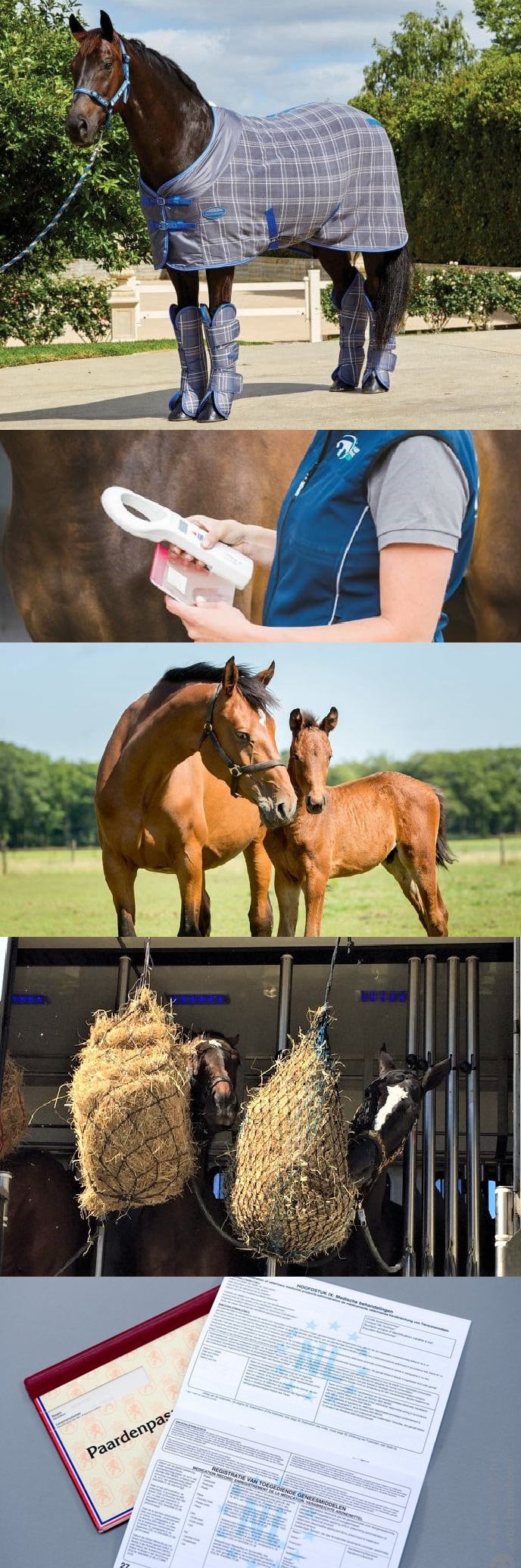
During carriage transport, we advise our customers to only put a thin blanket on horses and we prefer not to use leg protection. Especially during longer transports this can irritate your horse. They start sweating underneath and then kicking (with the risk of damage to your horse) to get rid of leg protection. Vehicles are completely smoothly finished, making it almost impossible for a horse to be hurt. However, we want to minimize the risk of injury.
Horses must be chipped at all times during transport (or DNA profile). The driver must also at all times be in possession of the passport of the horse in question, which, in accordance with the chip, states the chip number (or DNA profile). Please always give this passport to the driver. We deliver it to the recipient on location.
Blankets and bandages are allowed during the journey or flight, but preferably not on the hind legs. If these items have to accompany the horse, they must be provided with the customer’s name and zip code. Also gladly packed in a box or bag.
Horses travel for the account and risk of the owner / client. An additional transport insurance can be requested.
When transporting a foal or mare, we recommend weaning the foal well before transport. If the foal is only taken away from the mother on the day of collection, we reserve the right to refuse transport due to horse welfare. If the mare is removed too shortly in advance, there will be too much unnecessary stress during transport.
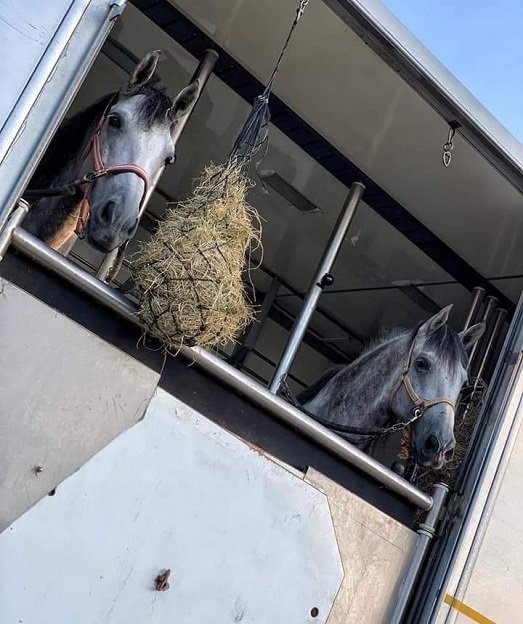
Horses receive hay during transport throughout the journey and water is regularly offered. If your horse receives medication or a special diet, please inform us in time. Chunks and muesli etc. are not fed during transport, but only during stable rest.
All horses from Europe traveling to the USA must undergo the following pre-export test. Piroplasmosis, Equine Infectious Anemia, Glanders (Kwade Droes) and Dourine. Mares older than 731 days must also undergo a CEM test